
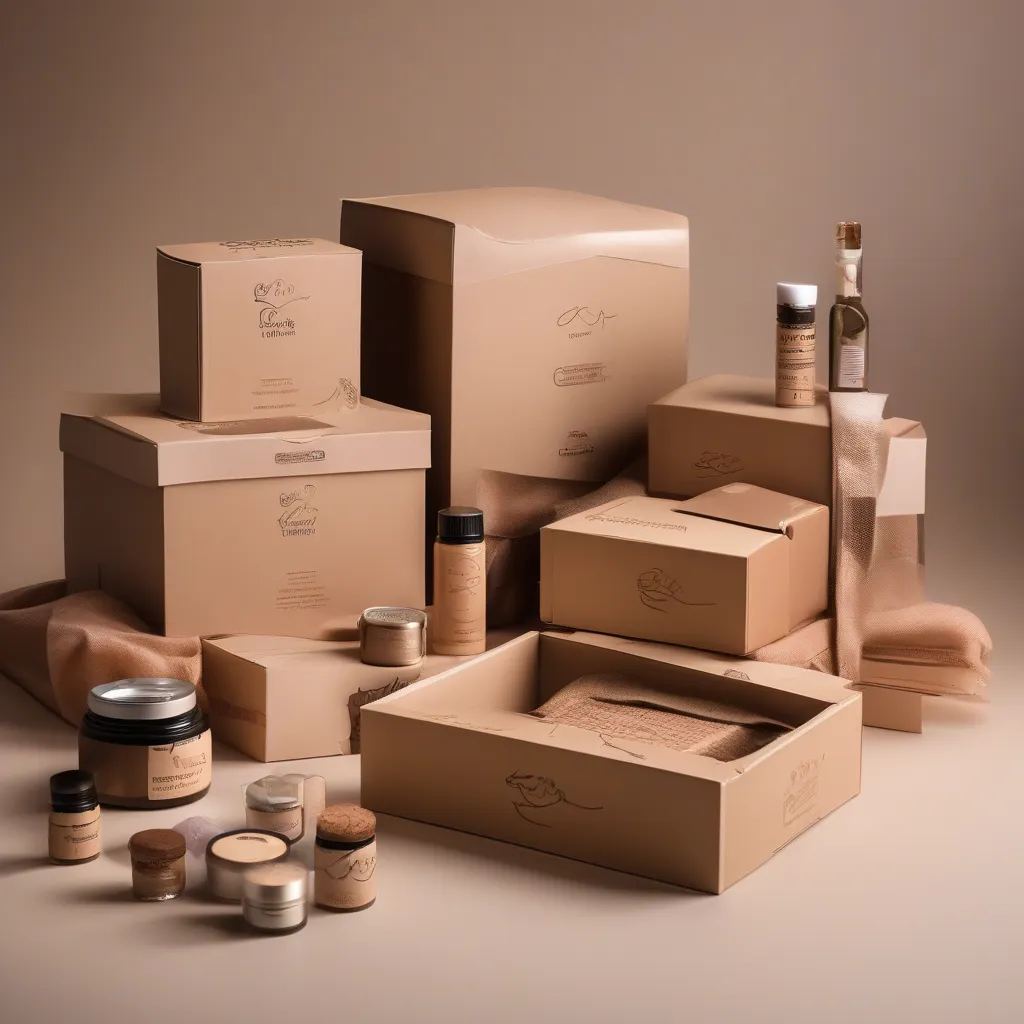
When evaluating packaging solutions for your brand, understanding custom boxes cost is essential for effective budget planning and margin management. Every business owner eventually reaches a stage where standard, off-the-shelf packaging no longer meets their branding or protective requirements. Transitioning to tailored packaging involves various financial considerations that go beyond the initial price per unit. Factors such as material selection, dimensional specifications, order volume, and printing techniques all play a significant role in determining the final expenditure. By carefully analyzing these variables, companies can optimize their packaging strategy without compromising on quality or presentation. Navigating the financial landscape of tailored packaging requires a clear understanding of how manufacturing processes influence overall expenses. Suppliers typically base their pricing models on economies of scale, meaning that larger production runs generally result in a lower cost per unit. However, committing to high volumes requires adequate storage space and upfront capital. Therefore, businesses must strike a balance between their immediate cash flow and their long-term packaging needs. Furthermore, the choice between corrugated cardboard, rigid stock, and lightweight paperboard directly impacts the baseline manufacturing expenses. Each material offers distinct structural and aesthetic advantages, making it crucial to align your packaging choice with your product fragility and brand positioning.
The total expenditure for personalized packaging is rarely a flat rate and depends heavily on several production variables. Material selection is often the most substantial driver of the overall budget. Premium materials like heavy-duty corrugated board or specialty rigid stocks command a higher price point compared to standard folding cartons. Additionally, the physical dimensions of the packaging dictate how much raw material is consumed per unit, directly influencing the manufacturer's pricing structure. Printing and finishing techniques also contribute significantly to the final invoice. Simple one-color flexographic printing is generally the most economical choice for high-volume shipping containers, whereas intricate offset printing, foil stamping, embossing, and soft-touch coatings add visual appeal at a higher cost. Furthermore, structural design complexity affects tooling and setup fees. Custom die-cuts, internal inserts, and unique geometric shapes require specialized machinery and custom cutting plates, which incur initial setup costs before mass production can begin. Balancing these aesthetic and structural enhancements with your target budget is a fundamental challenge for any growing brand looking to elevate its unboxing experience.
Strategic planning is the most effective tool for managing and reducing your overall packaging expenditure over time. One primary strategy is to evaluate your order quantities carefully. While ordering in bulk lowers the per-unit price, it also ties up working capital and requires warehouse storage. Conversely, ordering in smaller batches offers flexibility but increases the per-unit expense. Finding the optimal reorder point requires analyzing historical sales data and seasonal demand fluctuations. Another approach to financial optimization is simplifying the structural design. Eliminating unnecessary internal components or opting for standard dimensions can drastically reduce manufacturing overhead without sacrificing product protection. Brands can also leverage minimalist design principles to reduce ink coverage and finishing requirements, achieving a sophisticated look through simplicity rather than expensive embellishments. Collaborating closely with your packaging manufacturer during the design phase allows you to identify cost-saving alternatives, such as substituting materials or adjusting dimensions to maximize pallet efficiency during shipping.
What factors contribute most to the overall pricing of tailored packaging? The final pricing is primarily determined by material selection, order volume, dimensional size, and the complexity of printing or finishing techniques. Higher-end materials and intricate designs naturally require more resources and labor, increasing the overall investment.
How does order volume impact the per-unit price? Manufacturers typically offer tiered pricing structures where larger production runs yield a lower per-unit cost. This occurs because setup fees and fixed production costs are distributed across a greater number of individual units, improving manufacturing efficiency.
Are there setup fees associated with manufacturing personalized containers? Yes, many manufacturers charge initial setup or tooling fees, especially for custom die-cutting, custom plates, or unique structural prototypes. These fees cover the preparation of machinery and specialized tools required for your specific design.
Can I reduce expenses by simplifying my packaging design? Absolutely. Simplifying your structural design, reducing the number of printed colors, and utilizing standard dimensions can significantly decrease production overhead and lower your overall packaging expenditure.
 Cosmetic Boxes
 Display Boxes
 Eco Friendly Packaging
 Food And Beverage
 Gift Boxes
 Metalized Boxes
 Retail Packaging
 Box Style
 Other Products